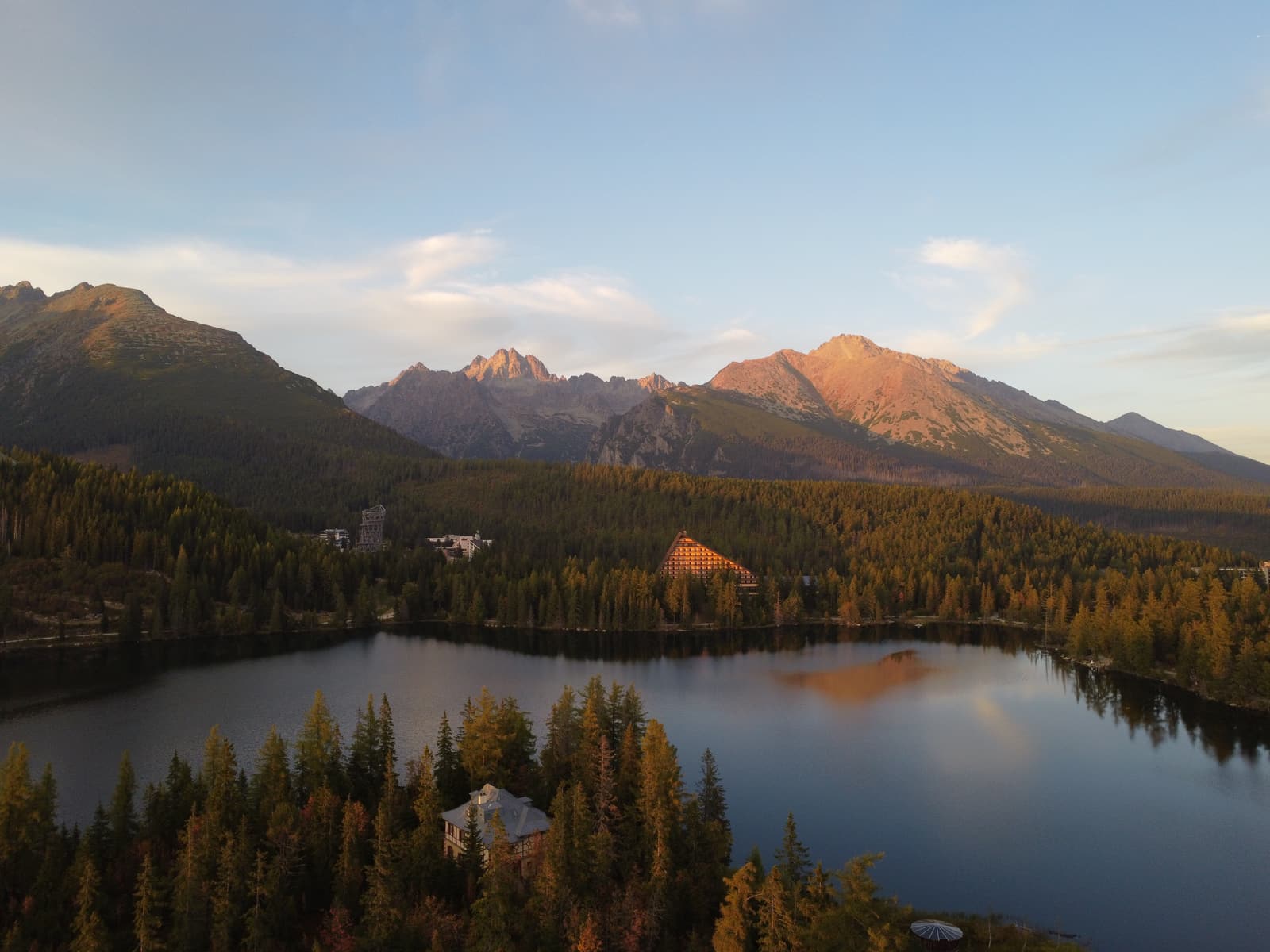
Štrbské Pleso is an easy place to enjoy and an easy place to underestimate. The lake and the cafés are at 1,346 m; the summits behind them rise above 2,500 m, and the weather, the rules and the risks up there are those of real high mountains.
At a glance
- Country: Slovakia (Prešov Region), inside the Tatra National Park (TANAP).
- Altitude: lake 1,346 m — the highest-lying resort in the High Tatras.
- Currency: euro. Cards are accepted almost everywhere; carry cash for mountain huts.
- Language: Slovak. Czech and Polish are understood; English and German are common in hotels.
- Emergencies: 112, or the Mountain Rescue Service (HZS) on 18 300.
- Time zone: Central European Time.
A short history
For centuries the lake belonged to the farmers of Štrba, who saw little use in it — there is a story that they once tried to drain it for pasture. In 1872 the landowner Jozef Szentiványi built a hunting lodge on the shore, the Hungarian Carpathian Society added a tourist hut in 1875, and within a decade the place was an official climatic spa. The rack railway from the valley opened in 1896 and the electric railway from Poprad in 1912.
The second transformation came with the 1970 Nordic World Ski Championships: ski jumps, a stadium, new hotels and a rebuilt rack railway. The pyramid of Hotel Patria followed in 1976, and in 2009 the oldest grand-hotel buildings on the shore reopened as the Kempinski. In November 2004 a windstorm flattened huge areas of forest along the foot of the Tatras; the young woodland you see from the train is its legacy.
The key hikes compared
Times are for the round trip from the resort at a steady pace, without long breaks.
| Hike | Time (return) | Ascent | Difficulty | Season |
|---|---|---|---|---|
| Lake loop | 45–60 min | none | Easy | All year |
| Popradské pleso | 2½–3 h | ≈200 m | Easy–moderate | All year (winter route) |
| Skok waterfall | 2½–3 h | ≈400 m | Moderate | All year to the waterfall |
| Predné Solisko (with lift) | 2 h | ≈280 m | Moderate, steep | Mid-June–October |
| Mlynická–Furkotská loop | 7–8 h | ≈1,000 m | Hard, chains | Mid-June–October |
| Kriváň | 7–9 h | ≈1,150–1,400 m | Hard, long | Mid-June–October |
| Rysy | 8–9 h | ≈1,250 m | Hard, chains | Mid-June–October |
 At the lake
Štrbské Pleso Lake Loop
The easy lakeside circuit everyone should walk
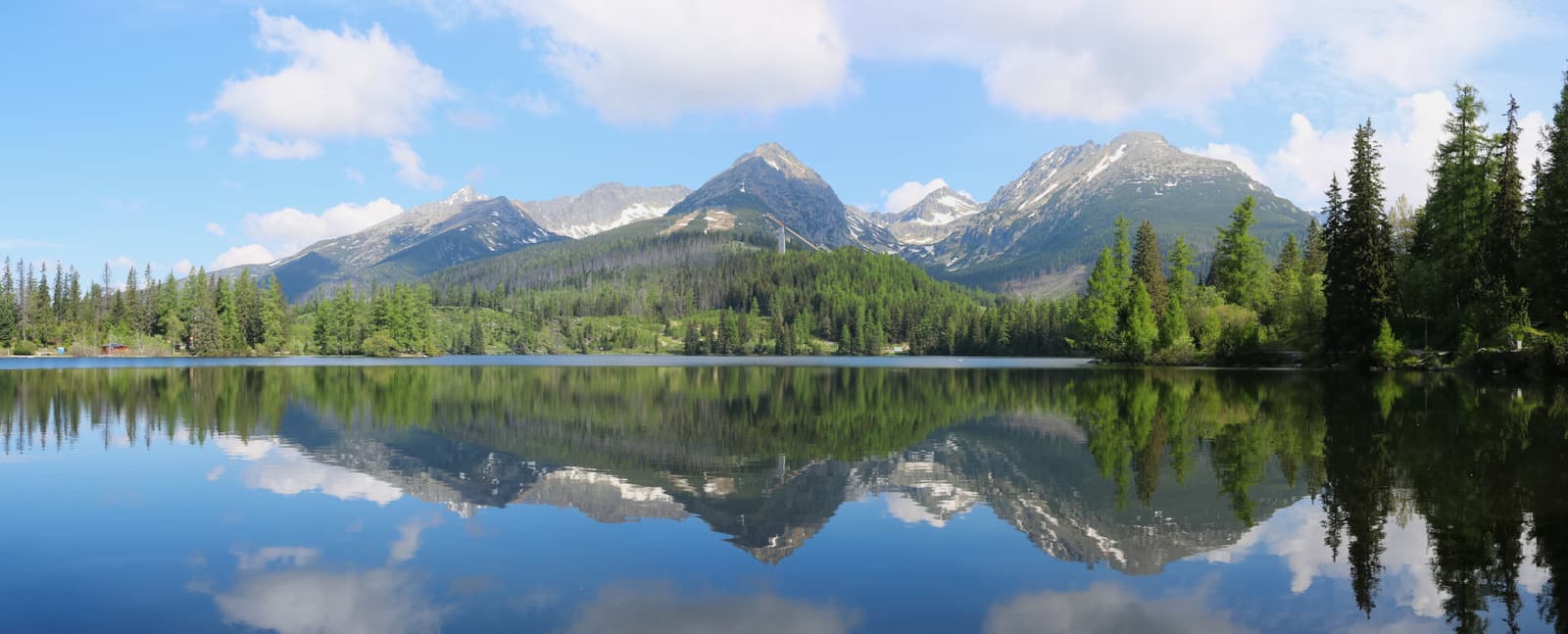
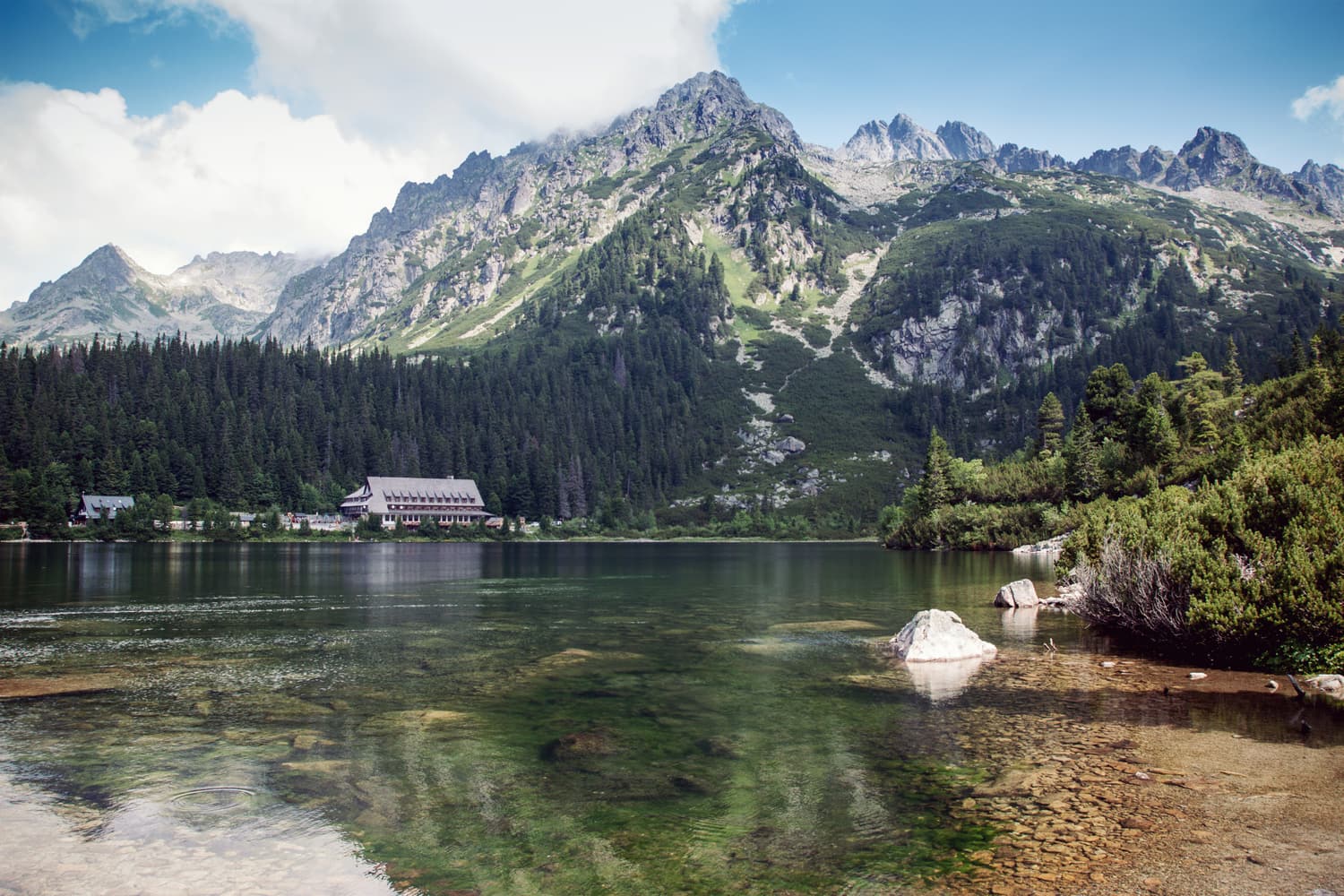
A glacial lake at 1,346 m ringed by spruce and dwarf pine, with the peaks above the Mlynická and Mengusovská valleys mirrored in it. The level path around the shore takes under an hour and suits prams and wheelchairs.
 At the lake
Solisko Chairlift & Predné Solisko
The quickest route to a real Tatra summit
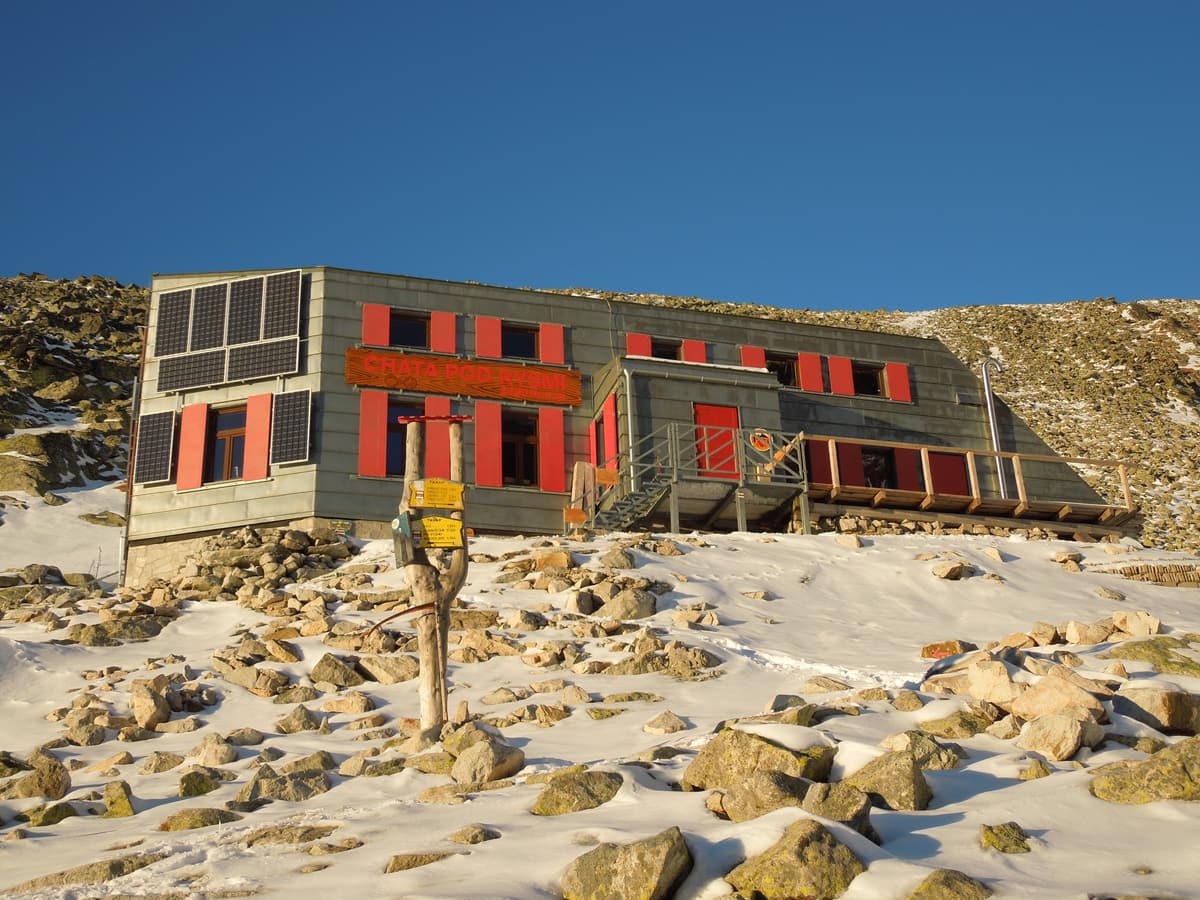
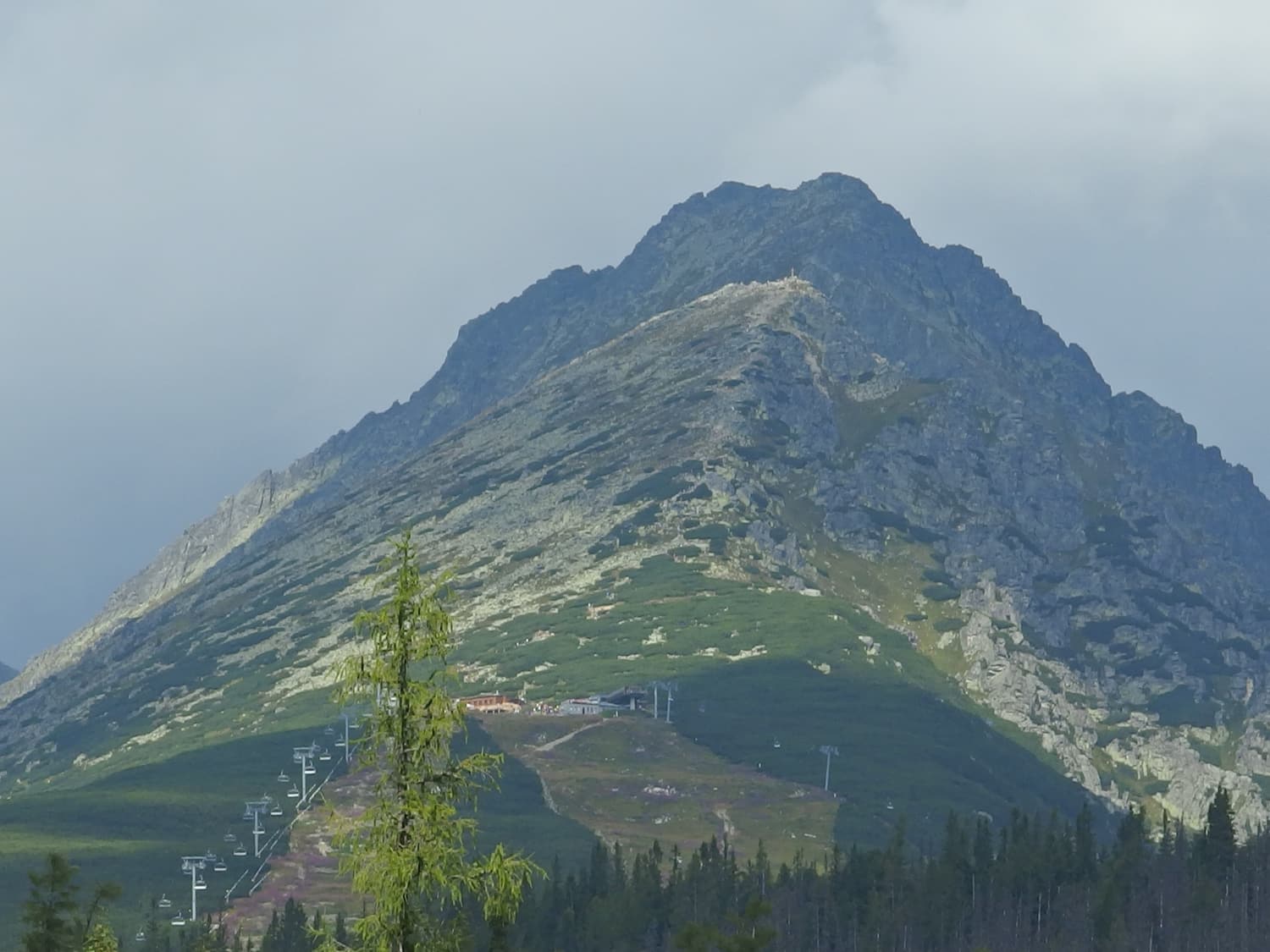
A chairlift climbs from the ski stadium to the Chata pod Soliskom hut at about 1,840 m. From there a rocky trail reaches the cross on Predné Solisko (2,117 m) in around an hour, with a bird’s-eye view of the lake.
 Hikes & summits
Popradské Pleso & the Symbolic Cemetery
The classic half-day hike from the lake
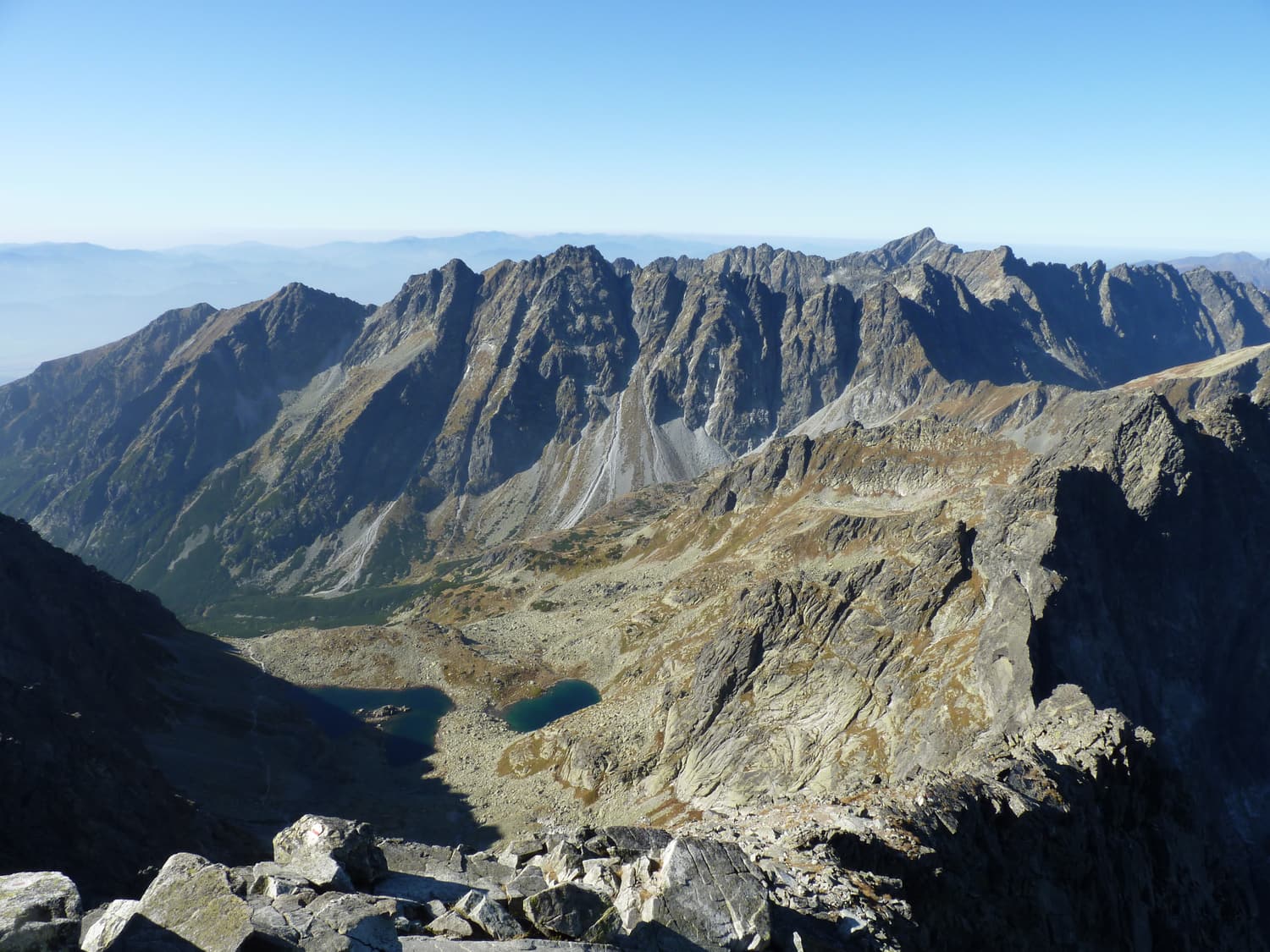
A deep-green tarn at 1,494 m under a wall of peaks, with a mountain hotel on its shore. Beside it, among limba pines, the Symbolic Cemetery remembers those who died in the Tatras.
 Hikes & summits
Trail rules and seasonal closures
Slovak trails are marked with coloured stripes between white bars — red, blue, green and yellow. The colour identifies the route, not its difficulty. Signposts give walking times, not distances.
- Stay on marked trails; leaving them requires a certified mountain guide.
- No wild camping, fires, picking plants or drones without a permit.
- Keep dogs on a lead, and check the current park rules for where they are allowed.
- Take all rubbish back down — huts are supplied by porters, not by road.
Mountain rescue and insurance
This is the point visitors most often miss. In Slovakia the Mountain Rescue Service (Horská záchranná služba) charges for rescue: a search, a carry-out or a helicopter can cost from hundreds to many thousands of euros, and ordinary travel or health insurance — including the European Health Insurance Card — does not normally cover it.
- Buy mountain insurance that explicitly covers rescue costs in the Slovak mountains. Slovak insurers sell it by the day for a small sum, online or by text message; alpine-club membership often includes it.
- Save the HZS number, 18 300, and install the HZS app, which sends your location with the call.
- Leave your route with your hotel if you are going high or alone.
Weather
The Tatras are small in area but fully alpine in behaviour. Expect it to be 6–8 °C colder on a 2,500 m summit than at the lake, and windier. In July and August afternoon thunderstorms build quickly: start early and plan to be off ridges by early afternoon. Snow can fall above 2,000 m in any month. The Slovak Hydrometeorological Institute and HZS publish mountain forecasts and, in winter, an avalanche bulletin. See when to visit for the month-by-month picture.
Wildlife — and bears
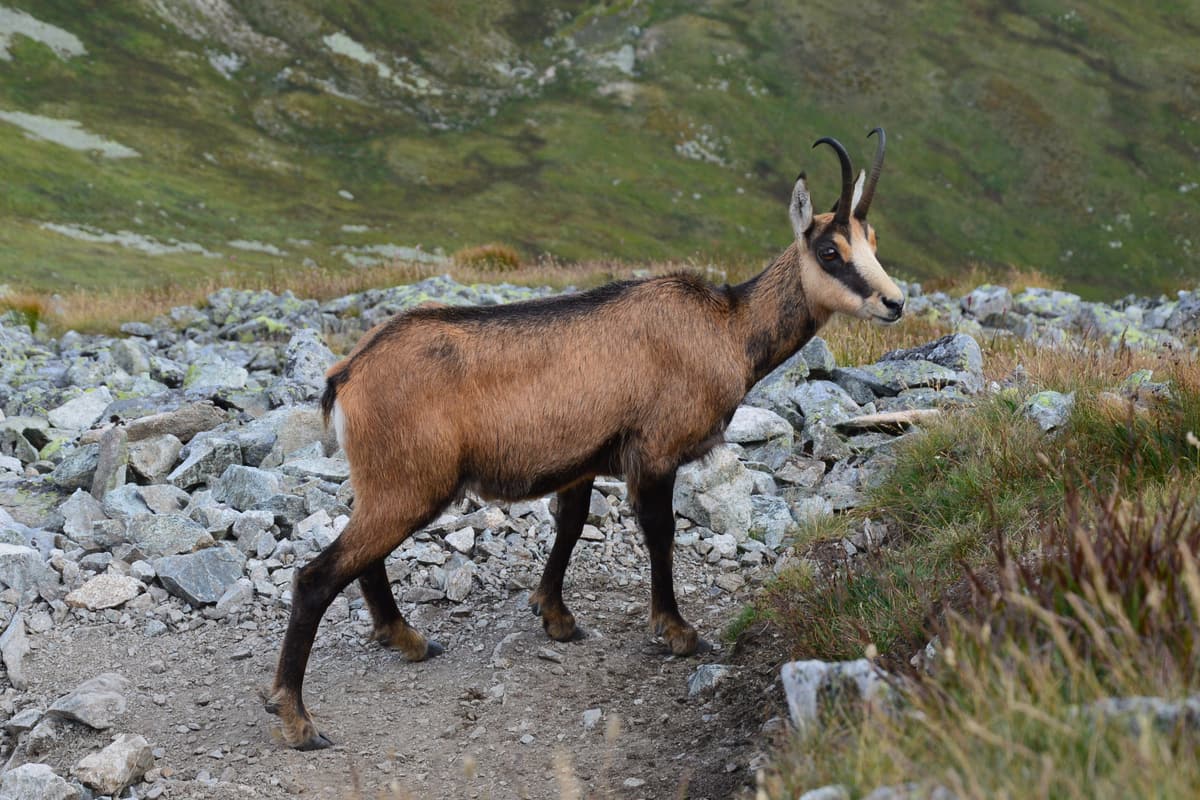
The park is home to the Tatra chamois and the Tatra marmot, both found nowhere else, as well as deer, lynx, wolves and brown bears. Bears live in the forests around the resort and occasionally come close to buildings. Encounters on busy trails are rare; reduce the odds further by not hiking at dawn or dusk in forest alone and silent, never leaving food or rubbish, and never approaching an animal. If you meet a bear, stay calm, do not run, and back away slowly.
Costs and money
Slovakia uses the euro. Štrbské Pleso is the priciest corner of the Tatras, yet still moderate by Alpine standards. As rough guidance, expect a main course in a hut or simple restaurant to cost around €9–15, a coffee €2.50–4 and a day’s parking around €10–15; a return on the Solisko chairlift is in the region of €20–25. Prices rise every season — check current rates. Trails and the lake are free.
Many hotels issue a regional guest card with discounts on lifts, pools and transport; ask at check-in.
Food and drink
Mountain food here is filling and good: bryndzové halušky (potato dumplings with sheep’s cheese and bacon), kapustnica (sauerkraut soup with sausage), garlic soup in a bread bowl, pirohy and grilled oštiepok cheese. In the huts, try tea with herbs — or the stronger “Tatra tea” liqueur, best left until you are down. Tap water is safe to drink.
What to pack
- Proper walking shoes or boots — trails are stony even on easy routes.
- A waterproof and a warm layer, in every month.
- Sun protection: the UV at altitude is strong, especially on snow.
- Water, snacks, a paper map or an offline map, and a charged phone.
- In winter: insulated boots, traction aids for icy paths, and proper avalanche kit and knowledge for anything beyond the marked winter routes.
With children, and with limited mobility
The lake loop is level and surfaced; the road to Popradské pleso from the railway stop is manageable with a sturdy pushchair; the Solisko chairlift and the Hrebienok funicular give effortless views. The modern trains on both railways are low-floor. For a wet day, head to AquaCity in Poprad.
Suggested itineraries
You will find one-day, three-day and week-long plans on our things to see page, and day trips worth adding on the best tours page.